HOME ABOUT ME RESEARCH TALKS & AWARDS RESUME

Research Overview

My work focuses on developing and using low-temperature scanning tunneling microscopy (STM) and electron spin resonance STM (ESRSTM) to detect, control, and understand individual spins and nanomechanical motion at the atomic scale. I combine quantum nanoscience, RF engineering, and instrumentation design to build experimental platforms that make new regimes of spin dynamics and sensing accessible.

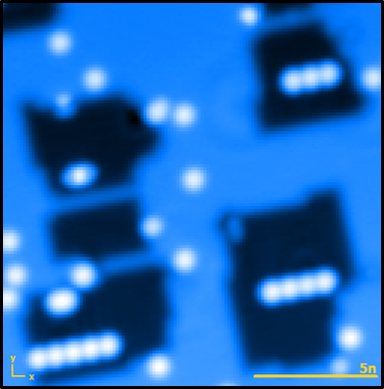
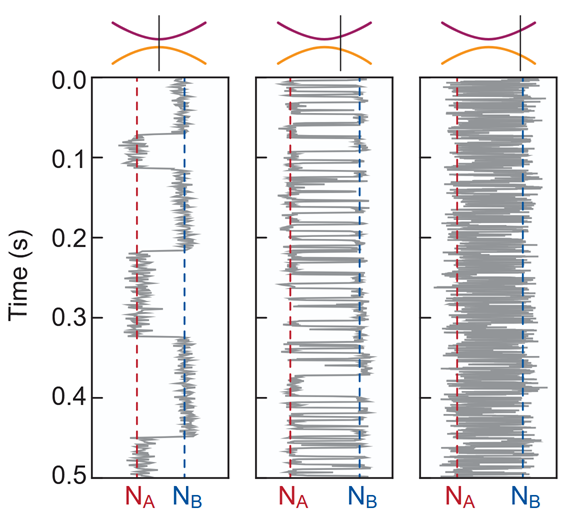
Using STM, we build and probe one-dimensional chains of magnetic atoms on surfaces, where the collective spin states can be engineered with atomic precision. These atomic chains can be constructed into atomic devices to detect and record magnetic waves carried on such atominc lines Comm. Physics 2020 Open Data. I have also studied how magnetic anisotropy and external magnetic fields shape the lifetime of the spin states on these small atomic chains, and how “diabolical points” in the spectrum can be used to suppress relaxation pathways leading to significantly longer lifetimes PRL 2024 Open Data (Editor's Suggestion, Featured in Physics).

The enhanced lifetime is essentially achieved through controlled dehybridization of the two lowest energy states in a higher-spin system. Further research is prepared to study the effects of this dehybridization through ESRSTM to understand how the coherence time and Rabi rate behave as a function of a hybridization.

Impact: Demonstrated that carefully engineered level structures can dramatically extend spin lifetimes in atomic chains, highlighting a mechanism that is relevant to physics, but also to chemistry and mathematical models of spin Hamiltonians. These ideas suggest possible strategies for designing spin-based devices with intrinsically enhanced and controllable lifetimes, where a single experimental parameter can be used as a practical “knob” to tune relaxation and coherence.
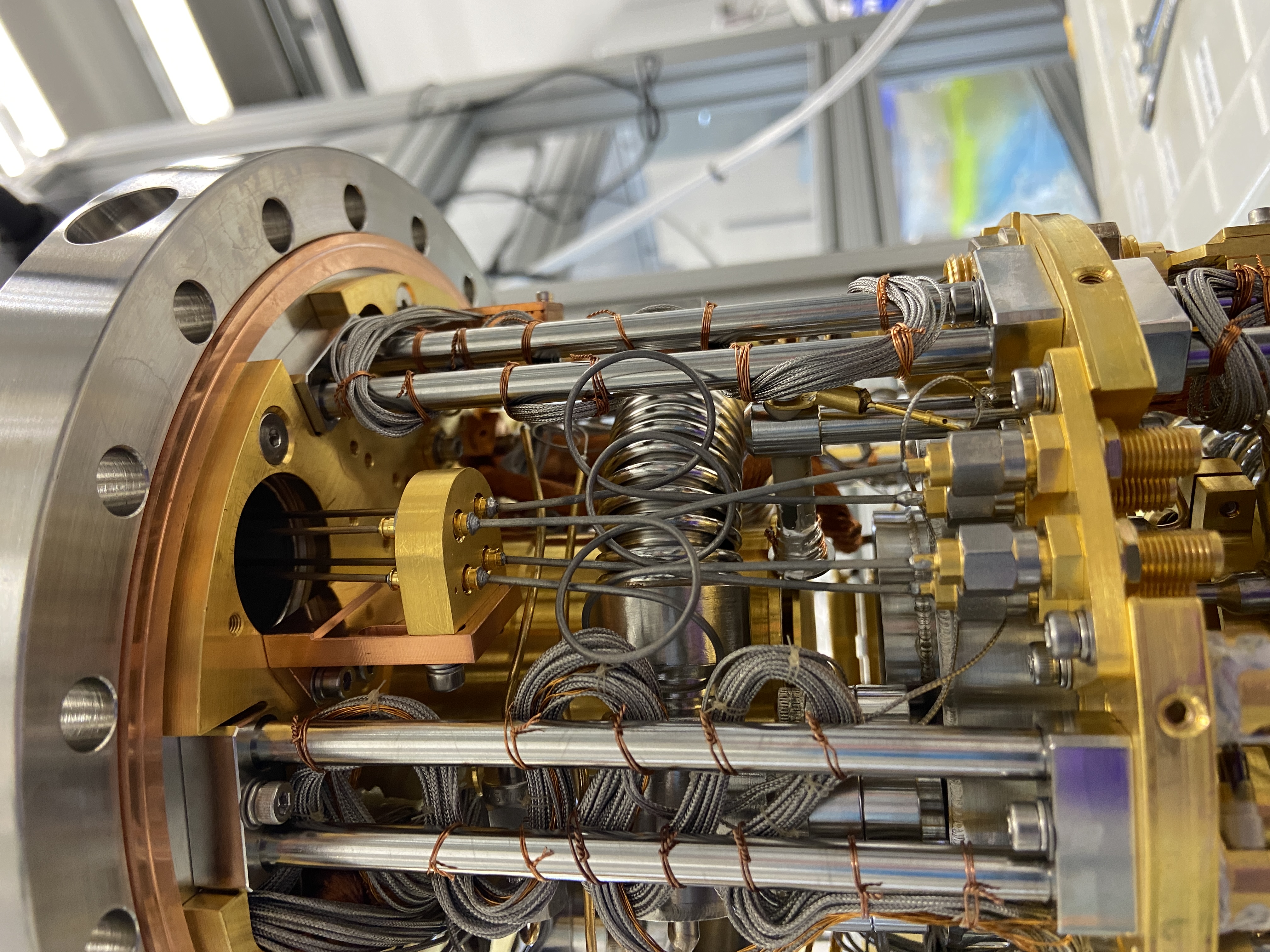
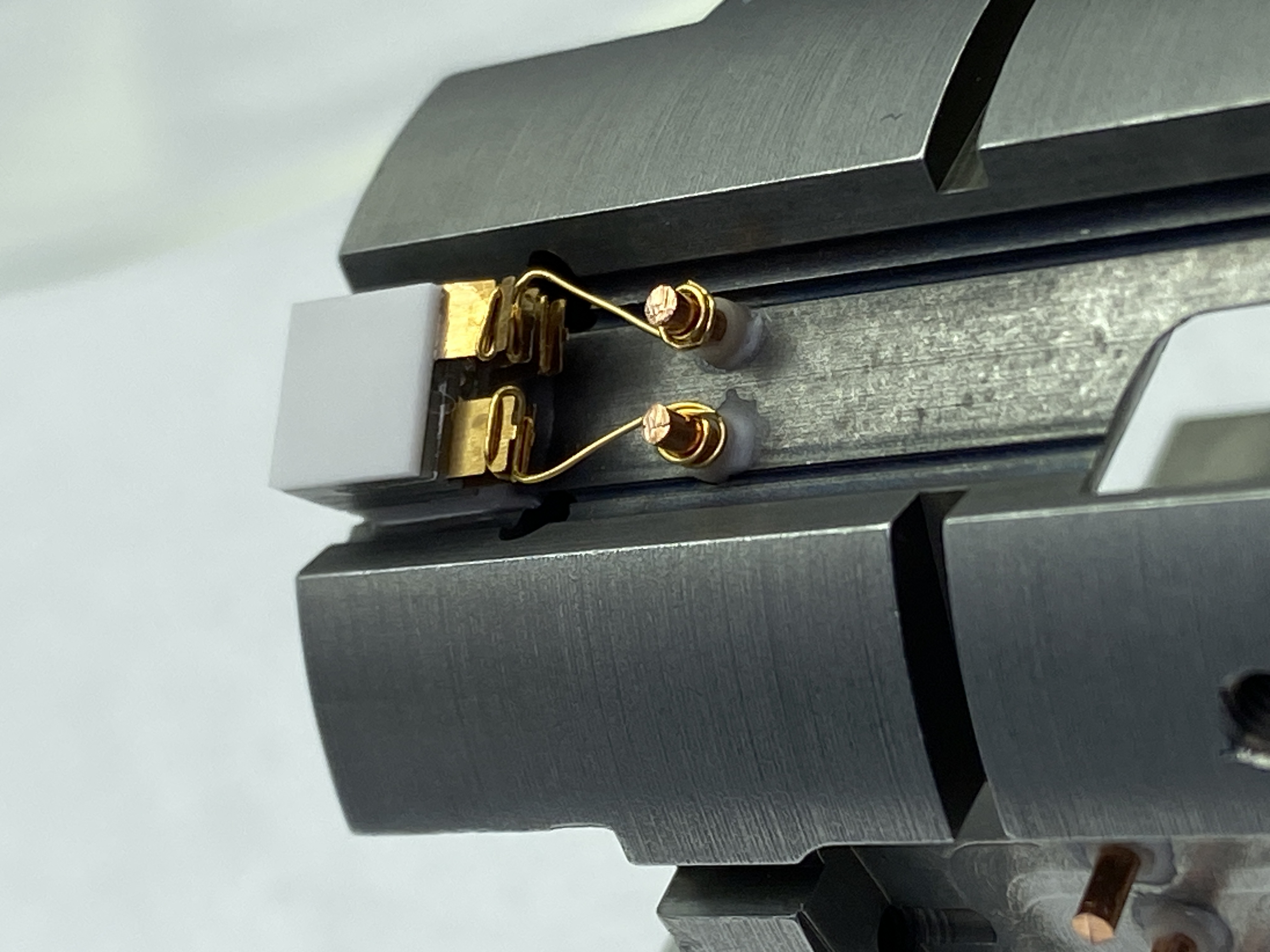
Electron spin resonance STM (ESRSTM) combines the atomic spatial resolution of STM with the frequency resolution of ESR, enabling frequency-domain measurements of single spins. I have been involved in the design, construction, and commissioning of ESRSTM instruments in laboratories across three continents, each with their own unique challenges RSI 2022. Some transmission lines are intended to send GHz signals directly to the STM tip, whereas others use an optimized antenna design, corroborated with finite-elements models. The most advanced system is equipped with a dilution refrigerator and uses cryogenic switches, filtering, and careful attenuation to minimise voltage noise and thermal load. These designs were captured in a full CAD model of the laboratory infrastructure.

An important part of building a functioning ESRSTM system is controlling the voltage noise seen by the tunnel junction. We use the zero-bias Josephson peak of a superconducting junction as a diagnostic: its height and width reveal residual noise in the RF and DC wiring. Tracking how this peak responds to changes in the setup allows us to identify and eliminate problematic noise sources, leading to improvements such as dedicated grounding, selective battery-powered equipment, fibre-optic network isolation, and more effective cryogenic filtering. Reducing this noise environment sharpens ESRSTM spectra and directly benefits coherence and relaxation times in superconducting and spin-based devices that operate in the same cryogenic platform.

Most scientific research involving ESRSTM is based on single atom qubits. Exciting developments may be achieved by combining radio-frequency (RF) STM with other techniques, such as Atomic Force Microscopy (AFM) or integrated transport devices in so-called multi-modal systems Roadmap 2025. The dilution refrigerator's low temperature also makes the Josephson junction an excellent platform for the characterization of the RF transmission. We are currently exploring further physics on these Josephson Junctions.

Impact: Co-developed ESRSTM systems across several laboratories and established cryogenic RF instrumentation that serves as a baseline for ongoing experiments in single-spin ESR and microwave-driven tunneling spectroscopy. The associated hardware: cryogenic coax, attenuators, filters, switches, and junction devices, spans the same layers used in many low-temperature quantum experiments, providing a practical platform for atomic-scale spin control within a broader cryogenic microwave ecosystem.


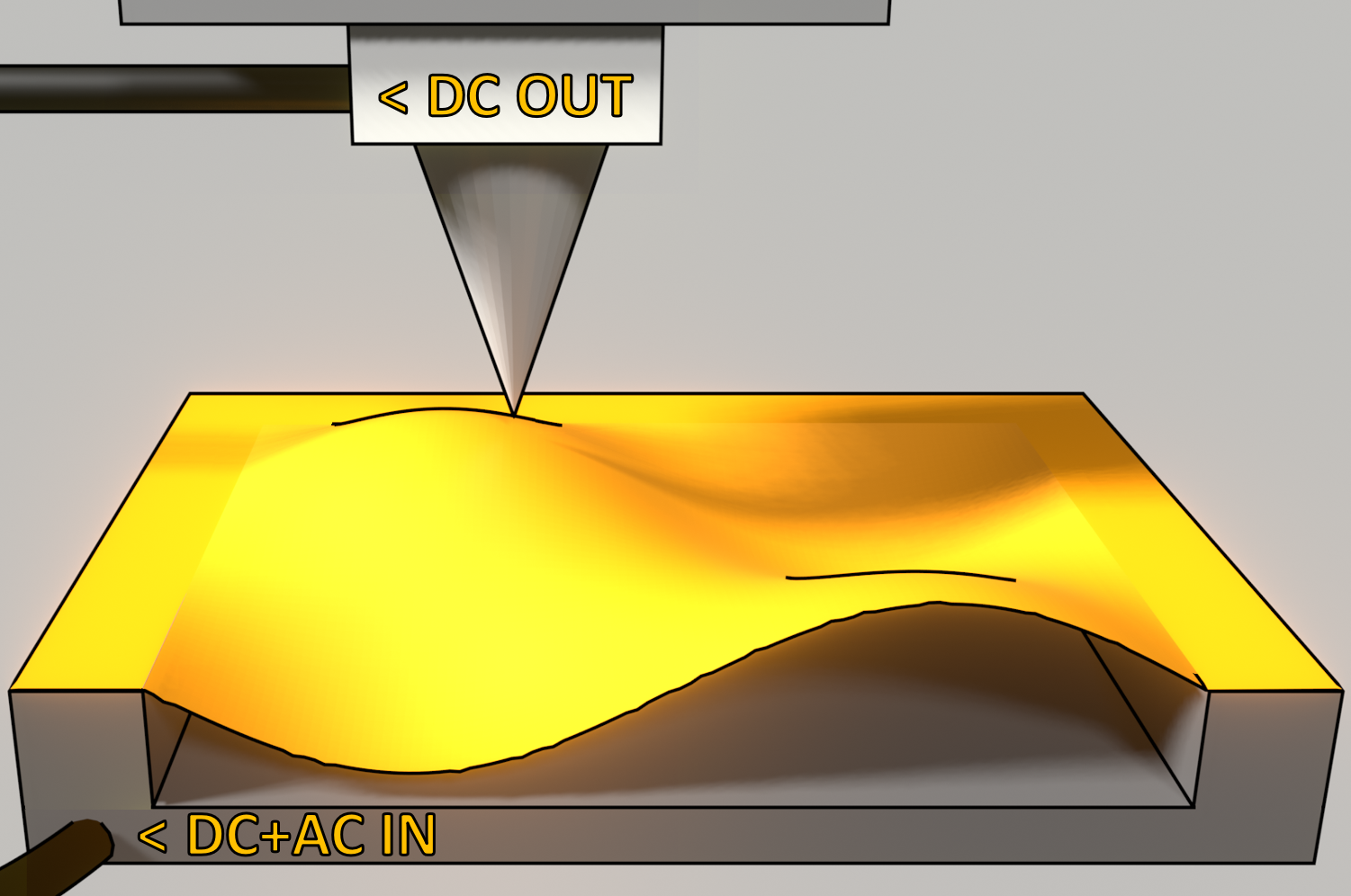
In another line of research I use the STM not only as a spectroscopic and topographic probe, but also as a sensitive detector for nanomechanical motion. By positioning the STM tip above a high-Q vibrating membrane, we can resolve its motion by monitoring changes in tunneling current. We have explored several measurement modalities arXiv 2026 and used the method to study Casimir forces arXiv 2025. In particular, we compare two membranes with different backplate distances and measure the resulting frequency shifts as the membrane material passes through the superconducting to normal-metal transition.

This approach allows mechanical resonances to be detected through the electronic response of the tunnel junction without optical access or dedicated displacement sensors. The method is compatible with low temperatures and high magnetic fields, and can be integrated into existing STM platforms. The technique is currently being explored in other laboratories.

Impact: Developed an STM-based membrane detection method that enables nanomechanical motion to be measured electrically in environments where traditional optical readout is difficult or undesired. The simplicity of the approach makes it an attractive option for studying physical phenomena that scale with surface area, such as pressure changes in vacuum.


This section contains early projects completed before my PhD and is not part of my current professional research record.

Internship (MSc Applied Physics)

During my MSc Applied Physics I completed an internship at TNO (Optics), where I investigated the feasibility of coupling light through the backside of a silicon-on-insulator optical chip in an industrial R&D setting. The report is under non-disclosure.

Undergraduate Studies

As part of my double BSc in Applied Mathematics and Applied Physics at Delft University of Technology, I contributed to a graphical interface and optimisation tool for designing multilayer-stack configurations under user-defined parameters.

Early Science Project

During my final year of secondary school I worked on a small-scale magnetic accelerator project, an experience that strengthened my interest in experimental physics.